 |
| Not official use. |
Given the Supreme Court's ruling, I doubt OSHA will plow ahead with a rule that is identical to the ETS. For now, the vax-or-test ETS mandate is off, but a final rule is still coming together.

|
| Not official use. |
Given the Supreme Court's ruling, I doubt OSHA will plow ahead with a rule that is identical to the ETS. For now, the vax-or-test ETS mandate is off, but a final rule is still coming together.

My last post was based on the new DOL Wage and Hour Fact Sheet # 84 (DOL: Pay employees for job-mandated COVID vaccines, tests, screening during normal work hours). Welp, DOL unpublished the fact sheet - it's gone (here's the full numeric list, with no #84 as of the date of this post).
I have not seen any formal explanation. As I noted in my post, the fact sheet was intertwined with the OSHA vax-or-test ETS, and relied on the same justification for tying the vaccine to the workplace (which, notably lost at the Supreme Court). Presumably, DOL is going back to the drawing board after the Supreme Court stayed the OSHA mandate.
Oh, that tricky Supreme Court - they totally faked us out! They announced that new opinions would be released at 10:00 AM, and then only released the utterly un-newsworthy opinion in Babcock v. Kijakazi (that said, it did address an obscure employment law-ish issue, holding "Civil-service pension payments based on employment as a dual status military technician are not payments based on 'service as a member of a uniformed service' under [the Social Security Amendments of 1983]").
But, you probably don't care about dual-status military technician social security benefits do you? You want the vax mandates! Out of nowhere, and without warning, SCOTUS dropped both vaccine mandate opinions:
OSHA Vaccine or Test Mandate
First up, a per curiam opinion in NFIB v. OSHA. As background, OSHA issued an Emergency Temporary Standard (ETS) generally requiring employers with 100 or more employees to require their employees to either get vaccinated against COVID-19 or subject themselves to regular testing. The Fifth Circuit granted a stay, effectively pausing the ETS. But, through a weird statutory procedural quirk, several challenges were consolidated and then assigned via a lottery to the Sixth Circuit, which lifted the stay and cleared the way for the ETS to go into effect. This prompted several parties to seek a stay from the Supreme Court.
Stay granted. Bottom line: SCOTUS concluded that the challengers "are likely to prevail" and stayed (paused) the ETS. The Supreme Court focused on the nature of the powers delegated to OSHA through the OSH Act - specifically, OSHA can set workplace standards for occupational safety to protect employees from work-related dangers. See where this is going?
Although COVID– 19 is a risk that occurs in many workplaces, it is not an occupational hazard in most. COVID–19 can and does spread at home, in schools, during sporting events, and everywhere else that people gather. That kind of universal risk is no different from the day-to-day dangers that all face from crime, air pollution, or any number of communicable diseases. Permitting OSHA to regulate the hazards of daily life—simply because most Americans have jobs and face those same risks while on the clock—would significantly expand OSHA’s regulatory authority without clear congressional authorization.
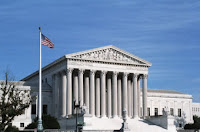
Justice Gorsuch (joined by Justices Thomas and Alito) penned an interesting concurring opinion mixing the major question doctrine and the nondelegation doctrine:
On the one hand, OSHA claims the power to issue a nationwide mandate on a major question but cannot trace its authority to do so to any clear congressional mandate. On the other hand, if the statutory subsection the agency cites really did endow OSHA with the power it asserts, that law would likely constitute an unconstitutional delegation of legislative authority.
Justices Breyer, Sotomayor, and Kagan dissented. So, for now the OSHA standard is on hold. OSHA has issued a statement on its website.
CMS Healthcare Worker Vaccine Mandate
Next up, Biden v. Missouri. The Centers for Medicare and Medicaid Services (CMS) issued a rule generally requiring healthcare workers at facilities that receive Medicare and Medicaid funding to get vaccinated (allowing for medical and religious exceptions). Slightly different background in this case as the lower courts had issued injunctions pausing the rule and the government asked SCOTUS to stay the injunctions.
Bottom line: Stay granted - but in this case that means the injunctions are stayed. Think of it as a double negative - the injunction was negating the rule, but now the stay is negating the injunction, so the bottom line is that the rule can move forward.
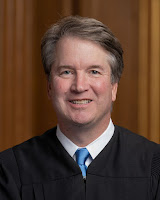 |
| Justice Kavanaugh received the petitions and referred them to the full court. |
Now, let's temper our expectations here by noting that the petitioners are seeking a stay pending a ruling by the lower courts on the actual merits. In other words, SCOTUS will not be issuing a final ruling on whether the mandates are lawful. That said, decisions on injunctive relief are often chock-full of signals as to the judges' views on the ultimate question.
Meanwhile, OSHA has already set some enforcement deadlines:
OSHA will not issue citations for noncompliance with any requirements of the ETS before January 10 and will not issue citations for noncompliance with the standard’s testing requirements before February 9, so long as an employer is exercising reasonable, good faith efforts to come into compliance with the standard.
OSHA is also in the midst of taking comments to turn the emergency standard into a permanent standard.
For employers, it's just more of the same uncertainty. The mandates are on for now, but will SCOTUS turn them off? Either way, we'll be waiting for even more litigation to unfold.
The Fifth Circuit stayed implementation of the OSHA vaccine mandate, but then the challenges were consolidated and the Sixth Circuit won the lottery to decide the consolidated case. On Friday, the Sixth Circuit dissolved the stay, clearing the way for OSHA to implement the mandate (enjoy the 57-page opinion here).
So, what's next for OSHA? You can read their latest update here, but the bottom line is:
OSHA will not issue citations for noncompliance with any requirements of the ETS before January 10 and will not issue citations for noncompliance with the standard’s testing requirements before February 9, so long as an employer is exercising reasonable, good faith efforts to come into compliance with the standard.
Not official use.
Of course, the Sixth Circuit panel is not the final word. Several of the challengers have already sought Supreme Court review. SCOTUSblog has the rundown.
The EEOC just keeps updating the ol' What You Should Know About COVID-19 and the ADA, the Rehabilitation Act, and Other EEO Laws guidance, most recently by adding a new section called COVID-19 and the Definition of “Disability” Under the ADA/Rehabilitation Act.
 |
| Not official use. |
An individualized assessment is necessary to determine whether the effects of a person’s COVID-19 substantially limit a major life activity. This will always be a case-by-case determination that applies existing legal standards to the facts of a particular individual’s circumstances.
Yesterday, the U.S. District Court for the Southern District of Georgia issued an order in Georgia v. Biden, concluding:
[T]he Court ORDERS that Defendants are ENJOINED, during the pendency of this action or until further order of this Court, from enforcing the vaccine mandate for federal contractors and subcontractors in all covered contracts in any state or territory of the United States of America.
A nationwide injunction! If you've been tracking the various vaccine mandates... well, let's just say they're not doing very well. The CMS mandate (for healthcare providers) has likewise been blocked nationwide. The headliner, i.e., the OSHA mandate, has likewise been enjoined and paused by OSHA pending a consolidated review (of a bunch of cases) at the Sixth.

1. The Court recognizes that the President is authorized to set procurement policy.
The Procurement Act does "emphasiz[e] the leadership role of the President in setting Government-wide procurement policy on matters common to all agencies, Congress intended that the President play a direct and active part in supervising the Government’s management functions.”
The EEOC just keeps updating its What You Should Know About COVID-19 and the ADA, the Rehabilitation Act, and Other EEO Laws guidance. Check out the latest addition, Section M. Retaliation and Interference.
 |
| Not official use. |
 |
| Not official use. |
What does all of this mean for employers? Right now... nothing really. It's an emergency stay that will be temporary. Presumably, we'll see a consolidation and whichever court gets the case will make a ruling that matters (although even then, we have the potential for SCOTUS review). Some employers may roll the dice and hope for a favorable ruling, but I'd hate to bet on that outcome and be wrong!
To get a flavor for the arguments in the Fifth Circuit case, check out the Petitioners' Emergency Motion to Stay Enforcement Pending Review and Expedite Review. You'll note that the focus is on OSHA's authority to mandate vaccines pursuant to the statute - the focus is not on individual liberty. We'll probably see some arguments regarding individual freedom to self-determination on health and medical issues, but I doubt that kind of "substantive due process" argument will win the day. The statutory authority arguments appear to be much stronger.
Yesterday, OSHA finally issued its COVID-19 Vaccine and Testing Emergency Temporary Standard (ETS). As a reminder, the ETS also serves as a notice of proposed rulemaking to eventually become a final rule.
I knew you were hungry, so I baked up some Lawffice Links:

The Safer Federal Workforce issued some new updates to its Federal Contractor Covid-19 vaccine mandate FAQS. The updates are conveniently marked "NEW" (as of me writing this) to help readers spot the changes.
Some interesting tidbits:
Questions arise about what it means for an employer to "control" the location where its employees are working on or in connection with a federal contract. The new FAQs give us some "indicia of control," including "interlocking management or ownership, identity of interests among family members, shared facilities and equipment, or common use of employees."
Federal agencies also received guidance on what to do if a contractor is not following the rule - a question that has come up repeatedly because the guidance thus far has omitted any discussion of penalties or consequences:
Covered contractors are expected to comply with all requirements set forth in their contract. Where covered contractors are working in good faith and encounter challenges with compliance with COVID-19 workplace safety protocols, the agency contracting officer should work with them to address these challenges. If a covered contractor is not taking steps to comply, significant actions, such as termination of the contract, should be taken.
Not official use.
We also got some advice to the contractors on how to handle problem employees:
One model for enforcement among employees with respect to non-compliance with a vaccination requirement is that being followed by Federal agencies. Guidance for Federal agencies is to utilize an enforcement policy that encourages compliance, including through a limited period of counseling and education, followed by additional disciplinary measures if necessary. Removal occurs only after continued noncompliance. Guidance for Federal agencies is that employees should not be placed on administrative leave while the agency is pursuing an adverse action for refusal to be vaccinated but will be required to follow safety protocols for employees who are not fully vaccinated when reporting to agency worksites.
Frankly, this is a little more lax than I appreciated. It is probably welcome news for employers who feared a strict vaccinated-or-fired standard to hit on December 8, 2021.
As employer COVID-19 vaccine mandates ramp up - voluntarily, in response to federal contractor mandates, and in anticipation of the OSHA emergency standard - the EEOC continues to update its Q&A on COVID-19 and EEO laws. Yesterday, it added a new section: L. Vaccinations – Title VII and Religious Objections to COVID-19 Vaccine Mandates.
The whole thing is worth a read (especially if you have employees requesting religious accommodations to vaccine mandates), but a few highlights:
|
| Not official use. |
|
| Not official use. |
Some of the new guidance specifically covers permissible incentives for getting the vaccine. Particularly noteworthy: the guidance states that there are no limits on the value of incentives (under either GINA or ADA) for employees get vaccinated by a health care provider that is not affiliated with the employer.
HT (plus more info): Eric Meyer at The Employer Handbook.
 |
| Not official use. |
You knew this was coming because Pres. Biden ordered it a few weeks ago... well, now it's here. Behold, Safer Federal Workforce Task ForceCOVID-19 Workplace Safety: Guidance for Federal Contractors and Subcontractors. In other words, the vaccine mandate for federal contractors.
If you have federal contractors, then read the whole thing. I'll note some highlights though:
 |
| Not official use. |
Federal vaccine mandates incoming! The AP reports this as:
President Joe Biden on Thursday ordered sweeping new federal vaccine requirements for as many as 100 million Americans — private-sector employees as well as health care workers and federal contractors — in an all-out effort to curb the surging COVID-19 delta variant.
I'm still working my way through the details, which is proving more challenging than I anticipated.
Federal Employees
I did track down the executive order that covers federal employees. That's pretty straightforward:
Each agency shall implement, to the extent consistent with applicable law, a program to require COVID-19 vaccination for all of its Federal employees, with exceptions only as required by law.
Federal Contractors
The executive order for federal contractors is not so simple. Pres. Biden doesn't even mention vaccines. Instead a Federal Workforce Task Force will issue Task Force Guidance by September 24, 2021. Magic 8-Ball, will there be vaccine mandates in that guidance? 8-Ball says, "it is decidedly so."
Private Employers
In what is possibly the most predictable result of all-time, a court has dismissed a Texas lawsuit in which the plaintiffs alleged that a hospital's employee vaccine requirement violated the Nuremberg Code. Yes, you read that right, the Nuremberg Code. See, Bridges v. Houston Methodist Hosp.
Look, there are some dicey vaccine issues in the workplace. Most of which revolve around disability and genetic information discrimination, reasonable accommodation, and the requirement that medical information be kept confidential (see, e.g., EEOC guidance on vaccines). There are also, of course, healthy debates about what policy will work best for any given employer - but that's generally their choice.
Arguing that the general rule of "at will" employment is somehow abrogated by the Nuremberg Code because the vaccine has only been authorized for emergency use and not yet fully authorized? Take it away Judge Hughes:
She also says that the injection requirement is invalid because it violates the Nuremberg Code, and she likens the threat of termination in this case to forced medical experimentation during the Holocaust. The Nuremberg Code does not apply because Methodist is a private employer, not a government. Equating the injection requirement to medical experimentation in concentration camps is reprehensible. Nazi doctors conducted medical experiments on victims that caused pain, mutilation, permanent disability, and in many cases, death.Although her claims fail as a matter of law, it is also necessary to clarify that Bridges has not been coerced. Bridges says that she is being forced to be injected with a vaccine or be fired. This is not coercion. Methodist is trying to do their business of saving lives without giving them the COVID-19 virus. It is a choice made to keep staff, patients, and their families safer. Bridges can freely choose to accept or refuse a COVID-19 vaccine; however, if she refuses, she will simply need to work somewhere else.
Look, I get it - sometimes in public interest law you have to stretch a little. This lawsuit appears to be a stretch waaay too far though.
OSHA updated its guidance on Protecting Workers: Guidance on Mitigating and Preventing the Spread of COVID-19 in the Workplace. The changes are summarized as:

At long last, we have the updated EEOC guidance on COVID-19 vaccinations. The two big questions I keep getting are:
|
| Not official use. |
We can unmask if we want to.
We can leave your friends behind.
'Cause your friends aren't vaxxed, and if they're not vaxxed,
Then they can't unmask at this time.
I wrote that myself. I'm not proud.
By now, I'm sure you've heard the news from the White House and CDC: "Fully vaccinated people can stop wearing masks." But, wait! Masking mandates have been coming at us from all angles, and the federal government is just one source.

On March 16, 2021, the SOH amended the commonwealth’s mask order by adding language directing to the CDC’s guidance for fully vaccinated people allow for no face coverings. That means that today’s CDC guidelines automatically go into effect in Pennsylvania. Masking requirement will still be in place as otherwise provided under the CDC guidance and for unvaccinated individuals until 70 percent of Pennsylvanians age 18 and older are fully vaccinated.
See May 13, 2021 Press Release. Check your state orders, folks. We're also not done yet. Here in State College we have a local masking ordinance. It also requires masks. Did they defer to the CDC as well? [gets hopes up] . . . they did not. In fact, earlier this week they signed an ordinance that expressly states that the mask mandate is in effect "[r]egardless of the requirements set forth" in the DOH orders.
Stay tuned though, I suspect we'll see a pretty quick change (or some "clarification") on that particular local ordinance pretty soon.


