 |
| Not official use. |
Given the Supreme Court's ruling, I doubt OSHA will plow ahead with a rule that is identical to the ETS. For now, the vax-or-test ETS mandate is off, but a final rule is still coming together.

|
| Not official use. |
Given the Supreme Court's ruling, I doubt OSHA will plow ahead with a rule that is identical to the ETS. For now, the vax-or-test ETS mandate is off, but a final rule is still coming together.

[Update 1/21/2022 2:05 pm: Where did it go? Looks like DOL pulled the Fact Sheet described in this post from its website (although, it still appears in the Department's Index of fact sheets)].
Welp, I'm sure this was supposed to coincide with the now-seemingly-dead OSHA vaccine mandate. That said, it it applies to employer mandates more broadly. I'm talking, of course, about U.S. Department of Labor Wage and Hour Division Fact Sheet #84: Compensability of Time Spent Undergoing COVID-19 Health Screenings, Testing, and Vaccinations Under the Fair Labor Standards Act (FLSA) (just rolls right off the tongue, doesn't it?).
The bottom line:
[I]f an employer requires an employee to obtain a COVID-19 vaccine dose, undergo a COVID-19 test, or engage in a COVID-19 related health screening or temperature check during the employee’s normal working hours, the time that the employee spends engaged in the activity is compensable. Employees must be paid for such time during normal working hours, regardless of where the activity occurs.
Sounds simple enough, but what about mandatory activities that occur outside of normal working hours?
DOL appears to take the general position that employer-mandated COVID-19-related activities are still compensable when done outside of working hours. But, there's a carveout in a vax-or-test scenario for employees who "voluntarily" choose not to get vaccinated and get tested instead - they do not get paid for their time spent testing. Employees with a disability or religious exemption to the vaccine mandate are not voluntarily foregoing the vaccine, so they would get paid for testing.
I should also note that the DOL's position on this seems based on an argument that is very similar to OSHA's (losing) argument at the Supreme Court. Specifically, the DOL fact sheet reads:
As reflected in the OSHA Vaccination and Testing ETS, the Federal Government has determined that vaccination is the most effective and efficient control available to protect employees from becoming seriously ill and dying due to occupational exposures to COVID-19. Employers must pay employees who report to a workplace where other individuals are present and who do not work exclusively outdoors for time spent going to, waiting for, and obtaining a mandatory COVID-19 vaccine dose because it is necessary that employees be able to perform their jobs safely and effectively during the pandemic.
In the context of the OSHA ETS, the Supreme Court specifically rejected this argument that vaccines are workplace employment safety regulations. So, it is not clear if DOL would fair any better - perhaps they would because in this context it would be an employer-issued requirement.
Oh, that tricky Supreme Court - they totally faked us out! They announced that new opinions would be released at 10:00 AM, and then only released the utterly un-newsworthy opinion in Babcock v. Kijakazi (that said, it did address an obscure employment law-ish issue, holding "Civil-service pension payments based on employment as a dual status military technician are not payments based on 'service as a member of a uniformed service' under [the Social Security Amendments of 1983]").
But, you probably don't care about dual-status military technician social security benefits do you? You want the vax mandates! Out of nowhere, and without warning, SCOTUS dropped both vaccine mandate opinions:
OSHA Vaccine or Test Mandate
First up, a per curiam opinion in NFIB v. OSHA. As background, OSHA issued an Emergency Temporary Standard (ETS) generally requiring employers with 100 or more employees to require their employees to either get vaccinated against COVID-19 or subject themselves to regular testing. The Fifth Circuit granted a stay, effectively pausing the ETS. But, through a weird statutory procedural quirk, several challenges were consolidated and then assigned via a lottery to the Sixth Circuit, which lifted the stay and cleared the way for the ETS to go into effect. This prompted several parties to seek a stay from the Supreme Court.
Stay granted. Bottom line: SCOTUS concluded that the challengers "are likely to prevail" and stayed (paused) the ETS. The Supreme Court focused on the nature of the powers delegated to OSHA through the OSH Act - specifically, OSHA can set workplace standards for occupational safety to protect employees from work-related dangers. See where this is going?
Although COVID– 19 is a risk that occurs in many workplaces, it is not an occupational hazard in most. COVID–19 can and does spread at home, in schools, during sporting events, and everywhere else that people gather. That kind of universal risk is no different from the day-to-day dangers that all face from crime, air pollution, or any number of communicable diseases. Permitting OSHA to regulate the hazards of daily life—simply because most Americans have jobs and face those same risks while on the clock—would significantly expand OSHA’s regulatory authority without clear congressional authorization.
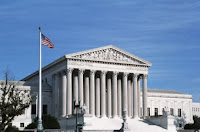
Justice Gorsuch (joined by Justices Thomas and Alito) penned an interesting concurring opinion mixing the major question doctrine and the nondelegation doctrine:
On the one hand, OSHA claims the power to issue a nationwide mandate on a major question but cannot trace its authority to do so to any clear congressional mandate. On the other hand, if the statutory subsection the agency cites really did endow OSHA with the power it asserts, that law would likely constitute an unconstitutional delegation of legislative authority.
Justices Breyer, Sotomayor, and Kagan dissented. So, for now the OSHA standard is on hold. OSHA has issued a statement on its website.
CMS Healthcare Worker Vaccine Mandate
Next up, Biden v. Missouri. The Centers for Medicare and Medicaid Services (CMS) issued a rule generally requiring healthcare workers at facilities that receive Medicare and Medicaid funding to get vaccinated (allowing for medical and religious exceptions). Slightly different background in this case as the lower courts had issued injunctions pausing the rule and the government asked SCOTUS to stay the injunctions.
Bottom line: Stay granted - but in this case that means the injunctions are stayed. Think of it as a double negative - the injunction was negating the rule, but now the stay is negating the injunction, so the bottom line is that the rule can move forward.
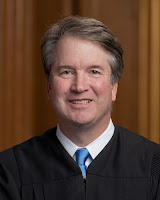 |
| Justice Kavanaugh received the petitions and referred them to the full court. |
Now, let's temper our expectations here by noting that the petitioners are seeking a stay pending a ruling by the lower courts on the actual merits. In other words, SCOTUS will not be issuing a final ruling on whether the mandates are lawful. That said, decisions on injunctive relief are often chock-full of signals as to the judges' views on the ultimate question.
Meanwhile, OSHA has already set some enforcement deadlines:
OSHA will not issue citations for noncompliance with any requirements of the ETS before January 10 and will not issue citations for noncompliance with the standard’s testing requirements before February 9, so long as an employer is exercising reasonable, good faith efforts to come into compliance with the standard.
OSHA is also in the midst of taking comments to turn the emergency standard into a permanent standard.
For employers, it's just more of the same uncertainty. The mandates are on for now, but will SCOTUS turn them off? Either way, we'll be waiting for even more litigation to unfold.
The Fifth Circuit stayed implementation of the OSHA vaccine mandate, but then the challenges were consolidated and the Sixth Circuit won the lottery to decide the consolidated case. On Friday, the Sixth Circuit dissolved the stay, clearing the way for OSHA to implement the mandate (enjoy the 57-page opinion here).
So, what's next for OSHA? You can read their latest update here, but the bottom line is:
OSHA will not issue citations for noncompliance with any requirements of the ETS before January 10 and will not issue citations for noncompliance with the standard’s testing requirements before February 9, so long as an employer is exercising reasonable, good faith efforts to come into compliance with the standard.
Not official use.
Of course, the Sixth Circuit panel is not the final word. Several of the challengers have already sought Supreme Court review. SCOTUSblog has the rundown.
 |
| Not official use. |
What does all of this mean for employers? Right now... nothing really. It's an emergency stay that will be temporary. Presumably, we'll see a consolidation and whichever court gets the case will make a ruling that matters (although even then, we have the potential for SCOTUS review). Some employers may roll the dice and hope for a favorable ruling, but I'd hate to bet on that outcome and be wrong!
To get a flavor for the arguments in the Fifth Circuit case, check out the Petitioners' Emergency Motion to Stay Enforcement Pending Review and Expedite Review. You'll note that the focus is on OSHA's authority to mandate vaccines pursuant to the statute - the focus is not on individual liberty. We'll probably see some arguments regarding individual freedom to self-determination on health and medical issues, but I doubt that kind of "substantive due process" argument will win the day. The statutory authority arguments appear to be much stronger.
Yesterday, OSHA finally issued its COVID-19 Vaccine and Testing Emergency Temporary Standard (ETS). As a reminder, the ETS also serves as a notice of proposed rulemaking to eventually become a final rule.
I knew you were hungry, so I baked up some Lawffice Links:

Federal vaccine mandates incoming! The AP reports this as:
President Joe Biden on Thursday ordered sweeping new federal vaccine requirements for as many as 100 million Americans — private-sector employees as well as health care workers and federal contractors — in an all-out effort to curb the surging COVID-19 delta variant.
I'm still working my way through the details, which is proving more challenging than I anticipated.
Federal Employees
I did track down the executive order that covers federal employees. That's pretty straightforward:
Each agency shall implement, to the extent consistent with applicable law, a program to require COVID-19 vaccination for all of its Federal employees, with exceptions only as required by law.
Federal Contractors
The executive order for federal contractors is not so simple. Pres. Biden doesn't even mention vaccines. Instead a Federal Workforce Task Force will issue Task Force Guidance by September 24, 2021. Magic 8-Ball, will there be vaccine mandates in that guidance? 8-Ball says, "it is decidedly so."
Private Employers
OSHA updated its guidance on Protecting Workers: Guidance on Mitigating and Preventing the Spread of COVID-19 in the Workplace. The changes are summarized as:


 illness to be work-related if an event or exposure in the work environment either caused or contributed to the resulting condition or significantly aggravated a pre-existing injury or illness."

1. Encourage workers to stay home if sick.
2. Encourage respiratory etiquette, including covering coughs and sneezes.
3. Provide a place to wash hands or alcohol-based hand rubs containing at least 60% alcohol.
4. Limit worksite access to only essential workers, if possible.
5. Establish flexible worksites (e.g., telecommuting) and flexible work hours (e.g., staggered shifts), if feasible.
6. Discourage workers from using other workers’ phones, desks, or other work tools and equipment.
7. Regularly clean and disinfect surfaces, equipment, and other elements of the work environment.
8. Use Environmental Protection Agency (EPA)-approved cleaning chemicals with label claims against the coronavirus.
9. Follow the manufacturer’s instructions for use of all cleaning and disinfection products.
10. Encourage workers to report any safety and health concerns.
 |
| Commentary only, not authorized use. |
Post: Today, a man put his hands on me. It’s then when [you] realize how weak they are that they can’t pick on someone of their own kind. I learned willpower, self[-]restraint and gained dignity. I wonder how he feels now.Even though she posted off-duty, the Commonwealth Court held that the employee's Facebook comment constituted a workplace threat and therefore she was ineligible for unemployment compensation (fired for willful misconduct). In fairness to the employee, the Court could have concluded that this was just hyperbole and letting off steam and not a legitimate threat - but they didn't.
Comment (by the employee): I would [have] sliced his throat open if it didn’t happen at work. And had no remorse.
 |
| SCOTUS Nominee Judge Brett Kavanaugh |
That policy question is not before us. My legal disagreement with the majority opinion boils down to one basic question: Who decides? Under current law, it is not the Department of Labor.He starts with a litany of risky endeavors, inviting the question of whether they too must be shut down (or altered) under the OSHA general duty clause:
Many sports events and entertainment shows can be extremely dangerous for the participants. Football. Ice hockey. Downhill skiing. Air shows. The circus. Horse racing. Tiger taming. Standing in the batter's box against a 95 mile per hour fastball. Bull riding at the rodeo. Skydiving into the stadium before a football game. Daredevil motorcycle jumps. Stock car racing. Cheerleading vaults. Boxing. The balance beam. The ironman triathlon. Animal trainer shows. Movie stunts. The list goes on.I confess that I enjoy (perhaps too much) watching students squirm as I challenge them with this issue from Judge Kavanaugh's dissent: "The Department [of Labor] cannot reasonably distinguish close contact with whales at SeaWorld from tackling in the NFL."
The new rule also requires employers to "inform employees of their right to report work-related injuries and illnesses free from retaliation."The new rule, which takes effect Jan. 1, 2017, requires certain employers to electronically submit injury and illness data that they are already required to record on their onsite OSHA Injury and Illness forms. Analysis of this data will enable OSHA to use its enforcement and compliance assistance resources more efficiently. Some of the data will also be posted to the OSHA website. OSHA believes that public disclosure will encourage employers to improve workplace safety and provide valuable information to workers, job seekers, customers, researchers and the general public. The amount of data submitted will vary depending on the size of company and type of industry.
Not official use.
Our new rule will 'nudge' employers to prevent work injuries to show investors, job seekers, customers and the public they operate safe and well-managed facilities.Presumably a shout-out to the (in my humble opinion, massively over-hyped) behavioral economics book, Nudge by Richard Thaler and Cass Sunstein.


